
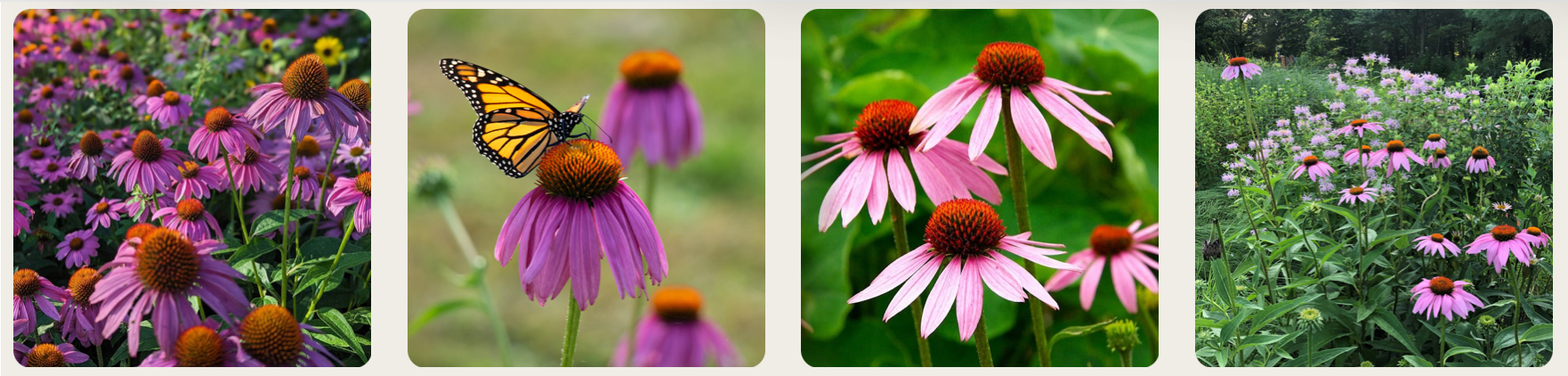
Echinacea purpurea
Taxonomy Document
Purple Coneflower
Taxonomic Classification
| Rank | Classification |
|---|---|
| Kingdom | Plantae |
| Phylum | Tracheophyta |
| Class | Magnoliopsida |
| Order | Asterales |
| Family | Asteraceae |
| Genus | Echinacea |
| Species | Echinacea purpurea |
| Common Name | Purple Coneflower |
Pollinators Attracted to Echinacea
Echinacea purpurea is a highly attractive plant for pollinators due to its large, nectar-rich composite flower heads and abundant pollen. It supports a wide range of beneficial insects.
Main Pollinators and Relationship
| Pollinator | Type | Relationship | Notes |
|---|---|---|---|
| Honey Bees | Bee | Mutualistic (primary pollinator) | Collect both nectar and pollen. Very efficient at pollinating Echinacea. |
| Bumblebees | Bee | Mutualistic | Strong preference for Echinacea; excellent pollinators due to their size and foraging behavior. |
| Leafcutter Bees | Bee | Mutualistic | Common visitors; they cut leaves to build nests but are important pollinators. |
| Sweat Bees | Solitary Bee | Mutualistic | Small but numerous; visit frequently for nectar and pollen. |
| Butterflies | Lepidoptera | Mutualistic (nectar focused) | Monarchs, swallowtails, painted ladies, and skippers feed on nectar. Less effective at pollen transfer than bees. |
| Hoverflies | Fly | Mutualistic | Attracted to nectar; provide some pollinator services. |
| Beetles | Various | Weakly Mutualistic | Occasional visitor; feed on pollen but contribute little to pollination. |
Summary of Relationship
- Mutualism is the dominant interaction
- The plant offers nectar (energy source) and pollen (protein source) in exchange for pollination services
- Echinacea is primarily bee-pollinated. Bees are the most effective pollinators because they actively collect pollen on their bodies and transfer it between flowers.
- Butterflies mainly act as nectar feeders and provide secondary pollination.
- The relationship is obligate for the plant's reproduction in many cases, as Echinacea benefits significantly from cross pollination.